
Toolbox “Recht auf Stadt 4.0 – Digitale Selbstorganisation als urbane Praxis”
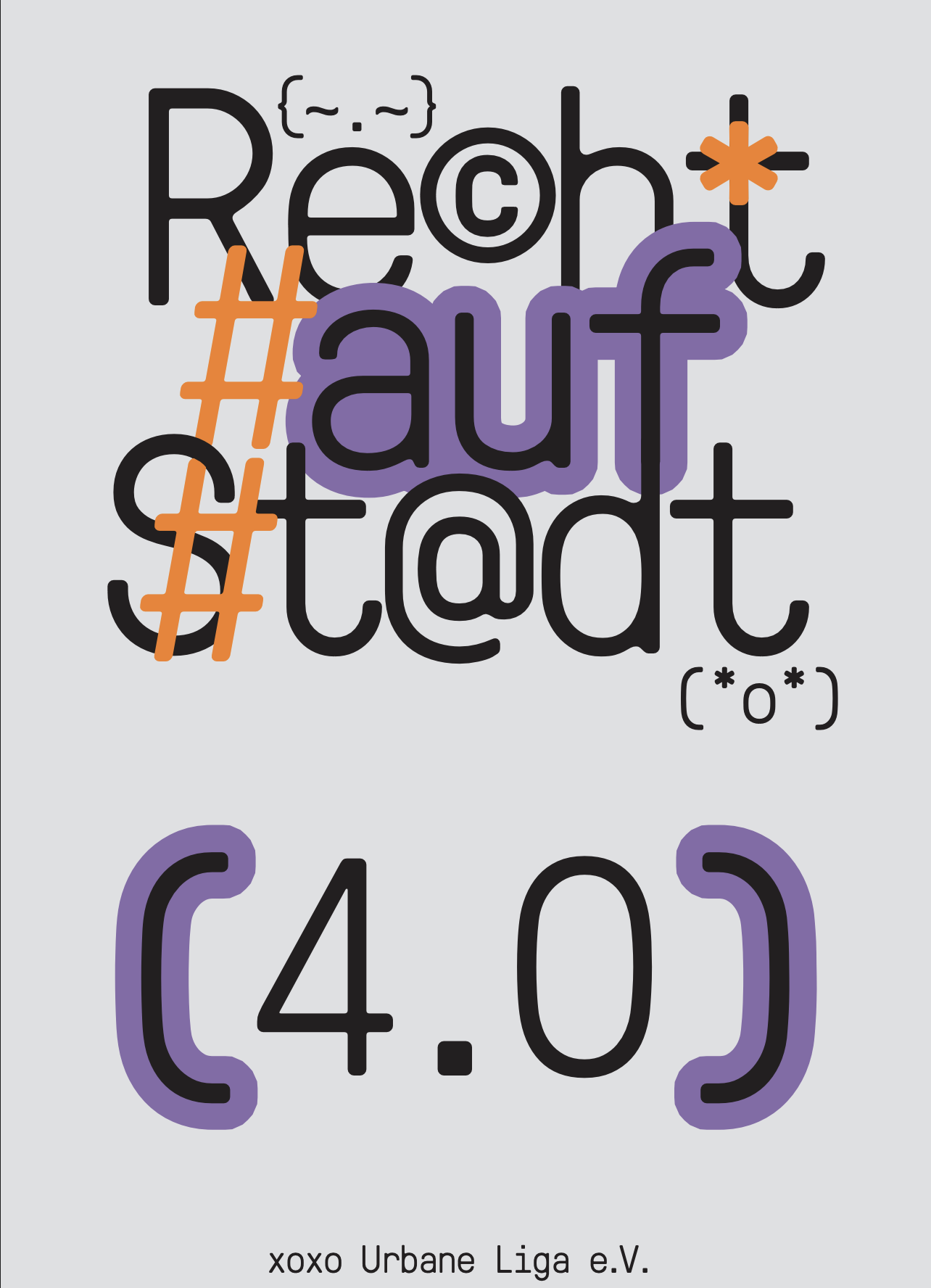
The LIVErary in Urbane Liga's new publication.
From tree-care platforms to urban waterway monitoring: In Leipzig, Stuttgart, Zurich, and other cities, initiatives are reshaping the urban landscape with the help of digital tools. These infrastructures make urban problems open to renegotiation by altering access and ownership structures—and thus provide important arguments against digital policies that ignore the needs of an active civil society.
After the smart city hype comes more smart city hype. As an alliance of young urban innovators, the Urbane Liga has witnessed firsthand—as a member of the advisory board for the “Smart Cities and Regions” phased plan—how digital policy at the federal level ignores the concerns of civil society. The major “Smart City Model Projects” funding program, with a budget of over 800 million euros for municipalities, is set to expire this year, and a renewal is not in sight. Yet the question of who develops digital infrastructure, who owns the data generated in the process, and which urban realities are made visible or invisible as a result remains unaddressed politically.
To continue this debate with a view toward fostering a city society based on solidarity and empowerment, we need good examples of how digital technologies can help local initiatives address specific needs and advance their demands. In our research project “Right to the City 4.0,” we document four initiatives that are developing digital tools in the areas of urban climate adaptation, water quality, mobility data, and knowledge infrastructure. These projects highlight concrete contradictions: between open-data laws and data sets that are effectively closed off, between volunteer-driven infrastructure work and a lack of institutional safeguards, and between cooperative ownership models and a procurement system geared toward private-sector providers. Based on the experiences of these initiatives, we derive policy demands for digital governance.
These demands raise a question that still needs to be answered: What specific political and infrastructural conditions are necessary for digital urban development that is aimed not at scaling and commercialization, but at collective control and situated practice?
Link to the online publication: https://urbane-liga.de/wpfiles/wp-content/uploads/2026/06/Recht-auf-Stadt-4.0-Einzelseiten.pdf